
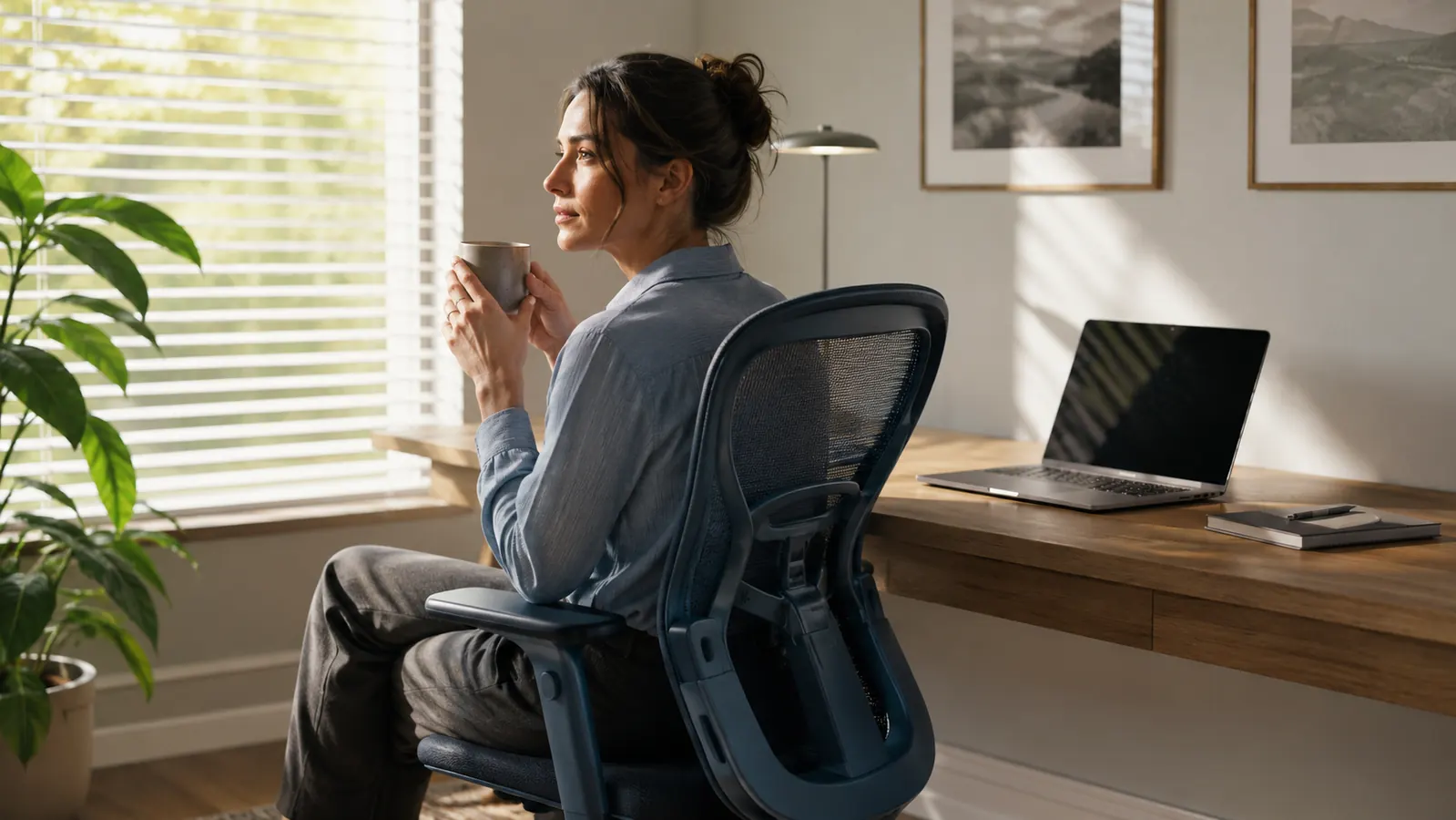
Six months ago I pulled the GABRYLLY ergonomic chair out of its box, spent 45 minutes assembling it, and sat down for what turned into a nine-hour workday. My previous chair was a budget Amazon special that had slowly turned my lower back into a constant source of low-grade complaints. I weigh 187 pounds, I work at a desk from 7am to 5pm most days, and I had genuinely started to believe that back pain was just part of working from home. I was wrong about that. But I want to be precise about what fixed it and what the GABRYLLY deserves credit for, because the marketing copy on this chair is doing quite a bit of heavy lifting.
The GABRYLLY ergonomic office chair is listed on Amazon with over 14,000 reviews and a 4.4-star average. For a budget mesh chair, that is a real signal worth paying attention to. I bought mine at current price after reading through about 80 reviews and noticing that most of the criticism clustered around assembly difficulty and a lumbar pad that some people found too firm. Both of those things are true. Here is everything else that is also true after six months of daily use.
The Quick Verdict
A genuinely solid ergonomic chair at a competitive price with real lumbar adjustability, but the headrest needs work and the armrest foam wears faster than the price suggests it should.
Amazon Check Today's Price →Your back is paying the price for a chair you bought without thinking about it
The GABRYLLY chair is consistently priced in the budget range with adjustable lumbar support, flip-up arms, and a breathable mesh back. Check today's price and see if it is in stock before reading the rest.
Amazon Check Today's Price on Amazon →How I've Used It
My setup: a 60-inch wooden desk, two 27-inch monitors, and a keyboard tray that keeps my elbows at roughly 90 degrees. I am 5 feet 11 inches tall with a longer torso than average, which matters when evaluating headrest placement. I work mostly in writing and research, so I spend about 70 percent of the day in a fairly upright posture reading and typing, and maybe 30 percent leaned back thinking. I do not use a footrest. I also run warm, so breathability in a chair is not a minor preference for me.
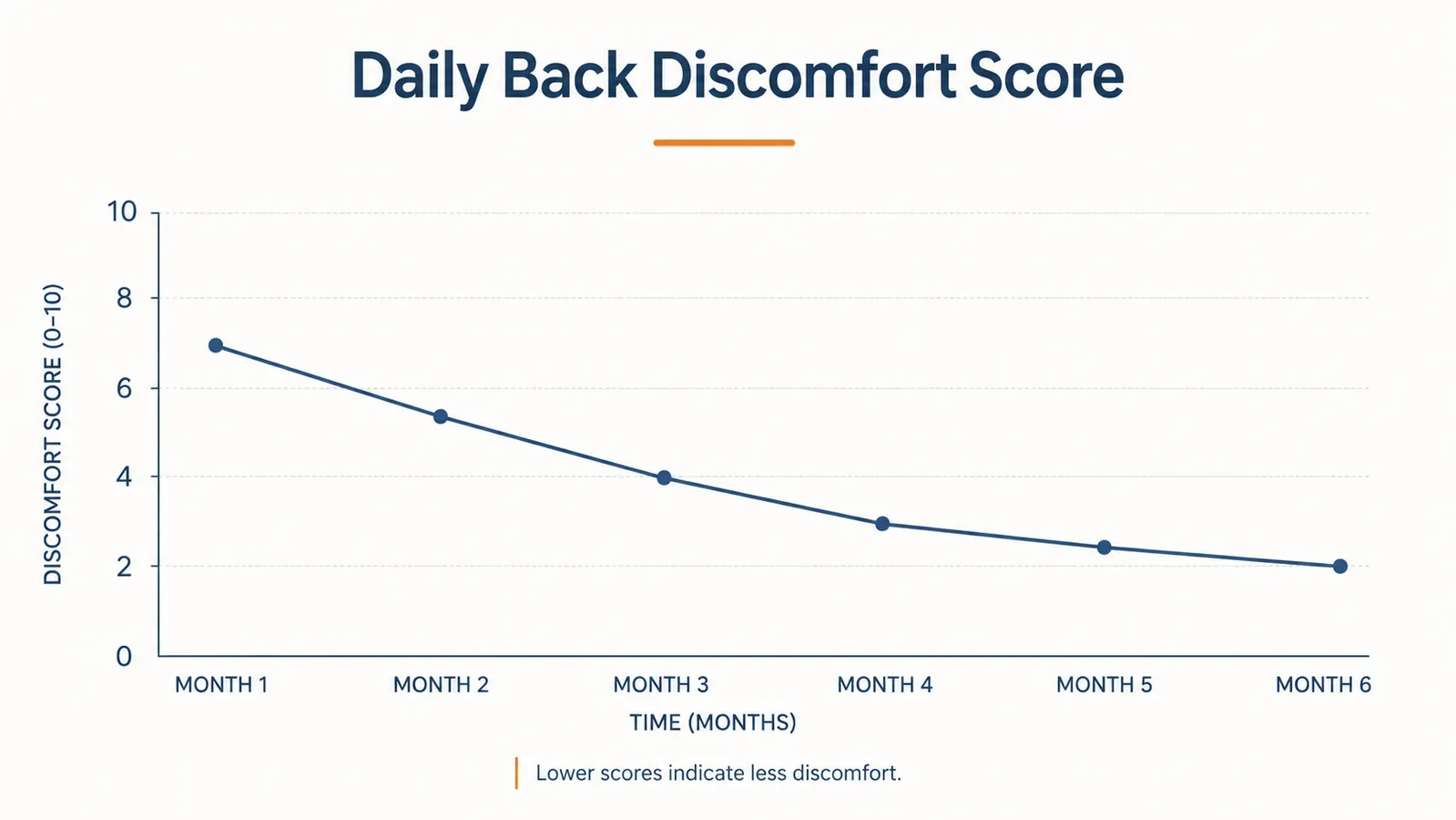
I tracked my lower back discomfort on a simple 1-10 scale for the first 90 days, then checked in monthly after that. Month one: around a 6 or 7 most afternoons, mostly coming from still learning how to dial in the lumbar support. By month three, that number had dropped to a 3. By month six, I am sitting at a 1 to 2 on bad days and a zero on most. Some of that improvement is the chair. Some of it is me being more deliberate about posture breaks. I am not going to pretend a chair fixes everything.
I also used it for occasional marathon sessions during a product launch month, logging a few 12-hour days. The mesh back remained comfortable throughout. No hot spots, no pressure on the lower back getting worse as the day went on. That was not true of my previous chair, which became genuinely painful after hour seven.
Lumbar Support: The Feature That Actually Matters
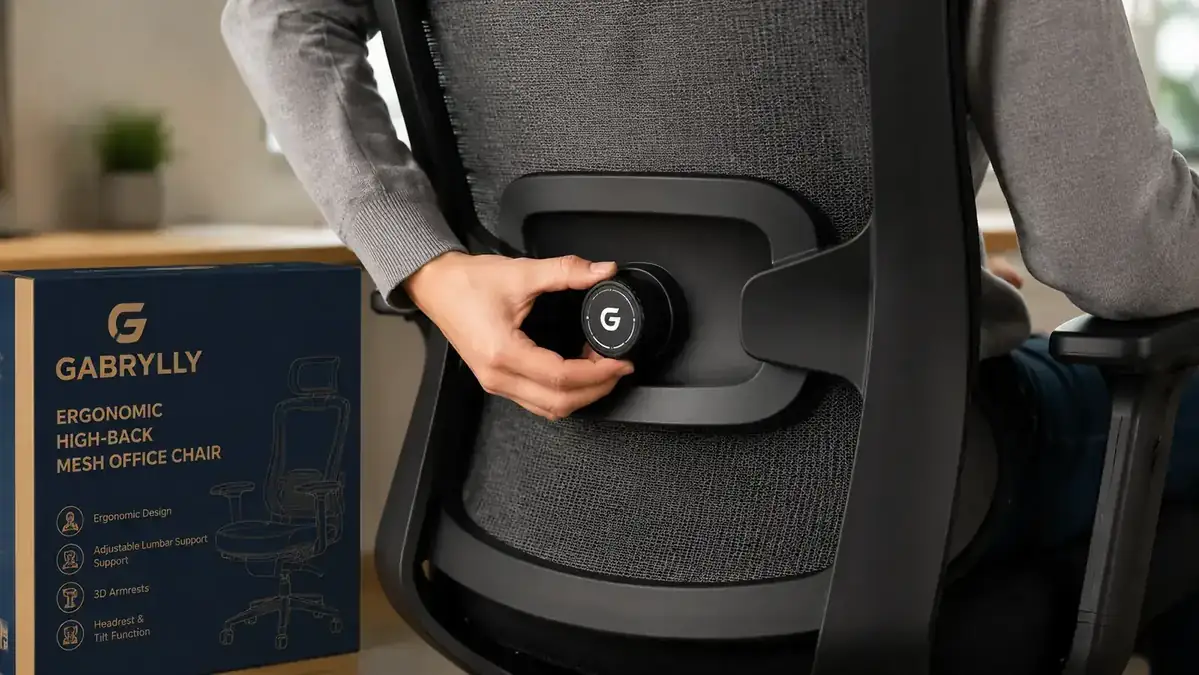
The GABRYLLY uses a separate lumbar support pad that attaches to the mesh back with a strap. You can slide it up and down to find the right vertebral contact point, and there is a dial on the side that lets you adjust how far it pushes into your lower back. This is the most important feature on the chair, and it is worth spending 15 minutes getting it right the first time rather than just dropping it somewhere in the middle and calling it done.
For me, the sweet spot was about 4 inches from the bottom of the mesh back and the dial set at roughly three-quarters of the way out. At full extension the pad is too aggressive for all-day wear. At minimum it does nothing. Once I found my setting, I marked it with a small piece of tape so I would not lose it after cleaning. That is the kind of thing the product page does not tell you to do, but should.
After six months, the lumbar pad itself shows zero visible wear. The strap that holds it to the back has loosened slightly, maybe 5 percent, meaning the pad can now slide a couple of millimeters before catching. Not a problem in use, but worth checking every few months if you move the chair around a lot. If that strap degrades over two or three years, I could see it becoming an issue. At the current rate, I am not worried.
Mesh Back and Breathability Over Time
The mesh on this chair is a medium-weight weave that lets air move without feeling like you are sitting in a hammock. I compared it briefly to a more expensive Herman Miller-style mesh at a coworking space and the difference is real but not night-and-day at this price tier. The GABRYLLY mesh gives a little more under load, which some people interpret as floppiness, but I found it comfortable. It distributes pressure across the back rather than concentrating it at a few hard points.
In summer, working without air conditioning on a humid afternoon, I noticed the mesh back was meaningfully cooler than any foam-back chair I have owned. That alone justifies the category for me. At six months the mesh shows no sagging or deformation. I pressed on it after six months compared to when I first assembled it and the tension is essentially identical. Good sign for long-term durability.
After six months, the mesh tension is essentially identical to day one. I expected some sag. There was none.
Flip-Up Arms: Actually Useful, With a Catch
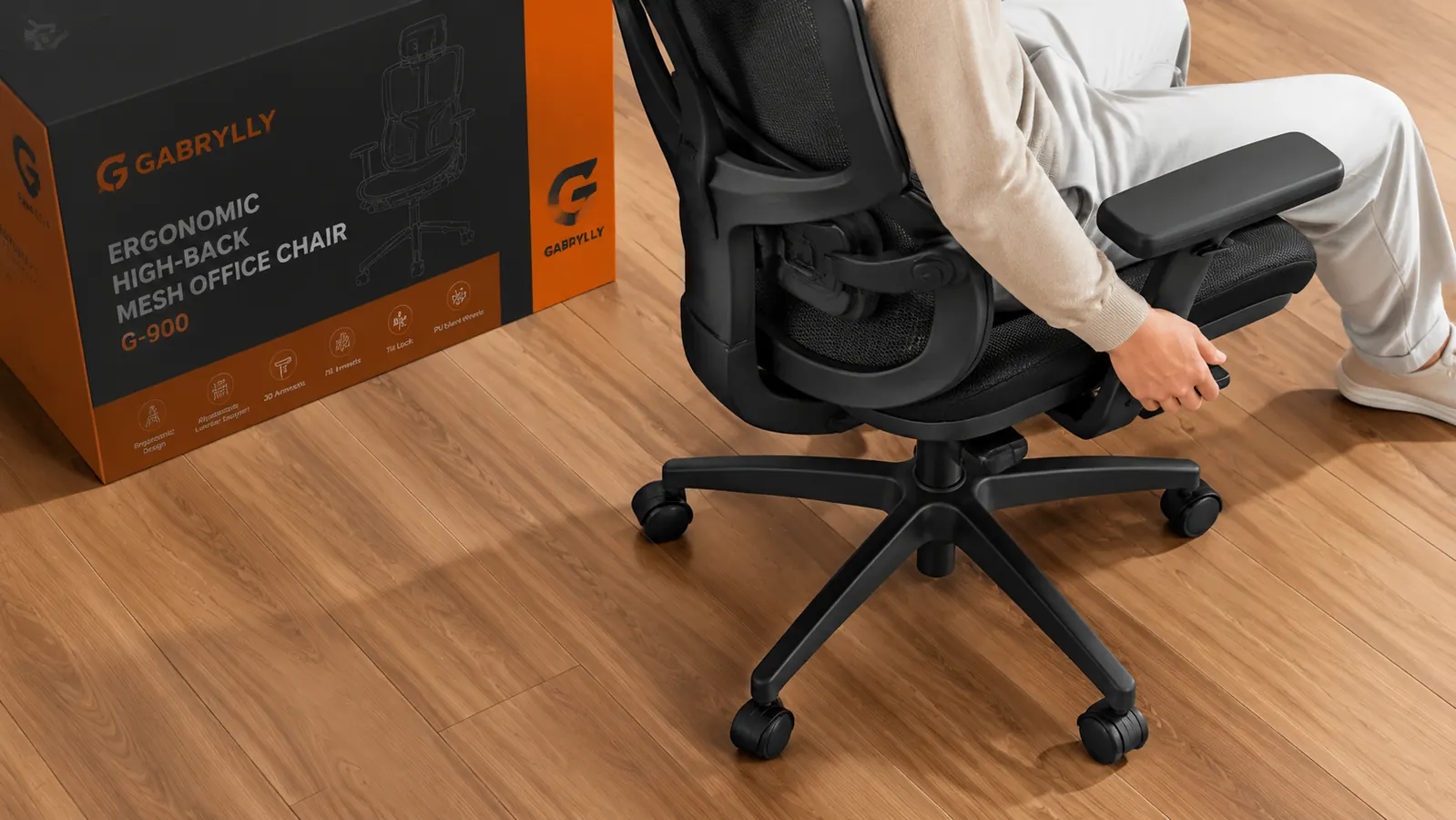
The flip-up arms are one of the better implementation of this feature I have seen in a chair at this price point. They flip completely out of the way for tasks where you want to pull the chair tight under your desk, and they click back down solidly. No wobble when in the down position, which is the main failure mode on cheaper chairs with this design.
The catch: the armrest surface itself is a hard PU material with a thin foam layer, and that foam began compressing noticeably around month four. By month six, the left armrest (my dominant-arm side where I rest more) feels meaningfully harder than it did at assembly. It is not painful, but it is something I notice. If I were building this chair I would have used a denser foam core or added a millimeter of thickness. For people who rest their arms heavily on the armrests during calls, this will bother you more than it bothers me. A pair of aftermarket armrest pads (available inexpensively on Amazon) completely fixes it if it becomes an issue.
Headrest: The Weakest Part of the Design
I want to be direct here because a lot of five-star reviews gloss over this: the headrest on the GABRYLLY chair is mediocre. At my height of 5 feet 11 inches, it sits too low in the default position and the adjustment range does not get it high enough to actually cradle the back of my skull unless I am sitting in a significantly reclined position. When I am upright, which is most of my workday, the headrest hits my neck rather than my head. This is a genuine design limitation, not a setup error.
People under 5 feet 8 inches will likely find the headrest usable. People taller than me, around 6 feet 2 inches and up, may find it completely unusable. I mostly fold it out of the way and do not use it. For a chair where the lumbar, armrests, and mesh back all perform well, the headrest is the one feature I would redesign if given the chance.

Build Quality and the Assembly Experience
Assembly took me 45 minutes, and I would estimate about 20 of those were because the instruction sheet illustrates some steps in a way that makes you think there are more components than there are. The hardware quality is better than I expected. The screws are standard sizes rather than proprietary, which matters if you ever need to disassemble and reassemble. The gas cylinder feels smooth and holds height without drifting, which is the most common failure mode on budget office chairs. After six months, my chair is still at the exact height I set it.
The five-star base is a matte black plastic composite that feels dense and has no flex when you shift your weight. The PU caster wheels roll well on both hardwood and carpet. On hardwood, they are quiet. On carpet, they require a bit more push than soft-rubber wheels would, but not to a degree that would bother most people. I have a chair mat on my side for other reasons and on that surface the wheels are excellent.
At six months, the overall structure feels as tight as day one. No creaking, no wobble, no looseness in the seat back connection. I tightened exactly zero bolts after initial assembly. That is not something I can say about the two previous budget chairs I have owned.
What I Liked
- Adjustable lumbar pad with a dial for depth, not just height, genuinely works when dialed in properly
- Mesh back maintains tension and breathability well across six months of daily use
- Flip-up arms click solidly and do not wobble in the down position
- Gas cylinder holds height reliably, no drift after six months
- PU caster wheels are quiet on hardwood and roll well on a chair mat
- Build structure is tight and creak-free six months in
Where It Falls Short
- Headrest sits too low for people 5 feet 9 inches or taller and adjustment range is insufficient to fix it
- Armrest foam compresses noticeably by month four on the dominant-arm side
- Assembly instructions are ambiguous at two or three steps, adding unnecessary time
- Lumbar pad strap has loosened slightly over six months, may be a longer-term concern
- Full lumbar extension is too aggressive for most body types and the product page does not warn you about this
How It Compares to Other Chairs I Considered
Before buying the GABRYLLY, I seriously looked at the FlexiSpot BS13, which sits in a similar price range and has a comparable feature set. The BS13 has a slightly more adjustable headrest and a wider seat pan, which makes it the better choice for broader-shouldered buyers or anyone over about 220 pounds. The GABRYLLY's lumbar system is easier to dial in, in my opinion, and the mesh quality is comparable. If you want a full comparison, I wrote a detailed breakdown in my GABRYLLY vs FlexiSpot BS13 comparison.
I also considered the Hbada and the Furmax in the mid-to-upper range. Both are functional chairs but neither has the depth adjustment on the lumbar support that the GABRYLLY offers, and both show structural loosening faster based on my reading of long-term reviews. For a person sitting eight hours a day, five days a week, the extra spend on the GABRYLLY is justified by the lumbar system alone.
Who This Is For
The GABRYLLY chair is the right call for remote workers or hybrid employees who sit six or more hours a day, have some lower back awareness, and want real lumbar adjustability without paying premium prices for a Herman Miller. It performs best for people between 5 feet 5 inches and 5 feet 11 inches where the headrest is in a usable range, and at body weights up to about 200 pounds where the seat cushion stays comfortable. If you are in that demographic and your current chair is causing back discomfort, this is a reasonable and well-supported upgrade. The 14,000-plus reviews are not fake noise; this chair earns its rating in normal daily use. For anyone wanting to understand the science behind why this kind of lumbar support matters, my guide on how ergonomic chairs fix home office back pain covers the mechanics in more detail.
Who Should Skip It
Skip the GABRYLLY if you are taller than 6 feet 1 inch and care about headrest support. The geometry simply does not work at that height in an upright position. Also skip it if you are significantly above 220 pounds, where the seat pan width can start to feel constraining and the cushion may compress faster than the timeline I described. And skip it if you lean on your armrests heavily throughout the day and do not want to buy aftermarket pads. The armrest foam compression is real and predictable. None of these are dealbreakers for everyone, but they are specific enough that I would rather tell you clearly than bury them.
Six months in, I would buy it again without hesitating
The GABRYLLY ergonomic chair is still my daily driver after half a year of 8-hour workdays. The lumbar support works, the mesh holds up, and the structure stays tight. Check the current price on Amazon and see if it ships free to your area.
Amazon Check Today's Price on Amazon →