
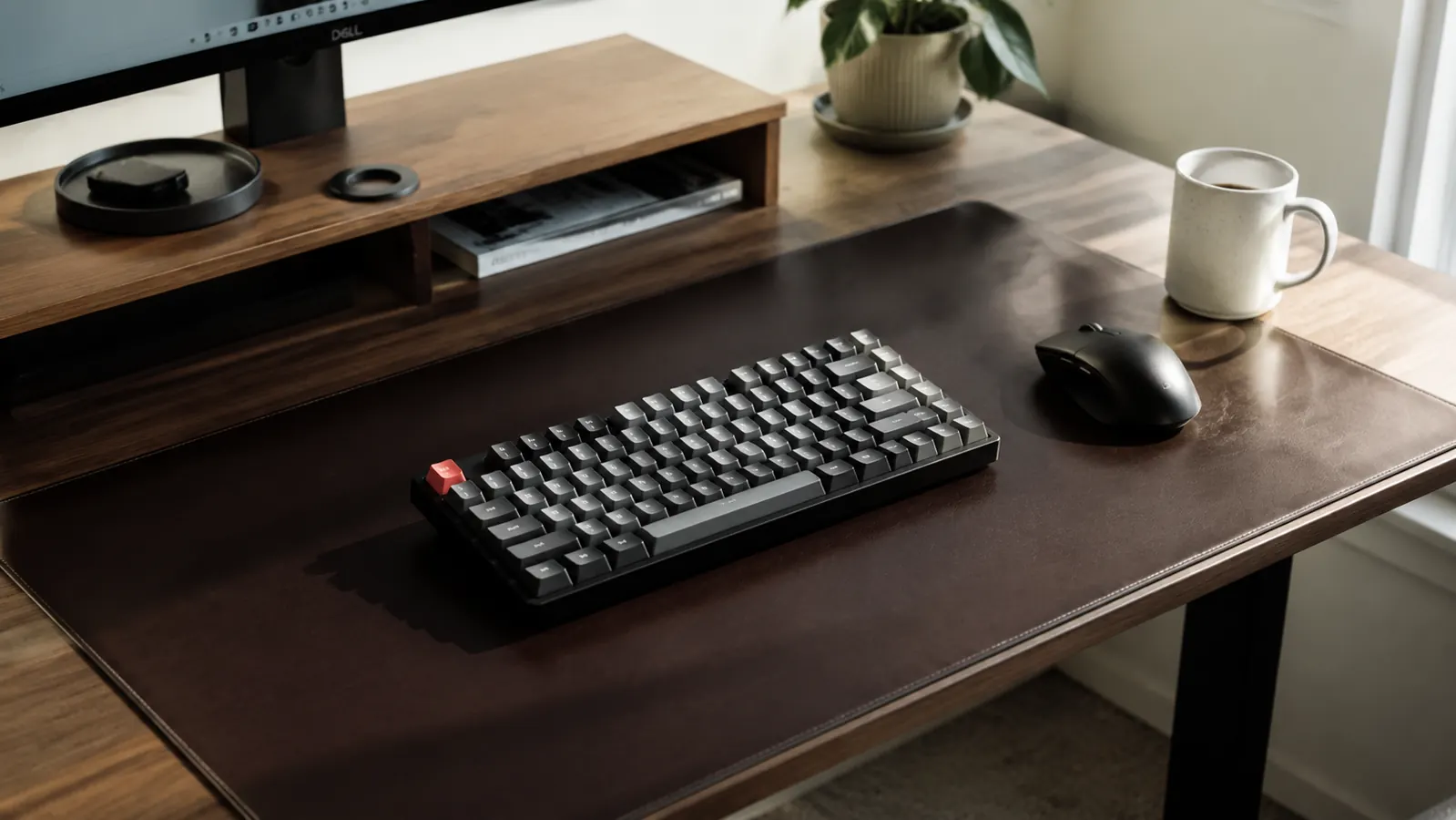
I ordered the Aothia desk pad after watching it dominate every 'best desk accessories' list I came across. Seventy-seven thousand Amazon ratings, a 4.6-star average, a price that rounds to fourteen dollars. It seemed like a settled question. But after buying three different color options across two separate orders to test edge stitching consistency, I found a handful of things the product listing quietly skips over. None of them are dealbreakers for most people. One of them is a genuine dealbreaker for a specific desk setup. Here is the honest version of this review.
The Quick Verdict
Excellent value for wood or laminate desks. The color accuracy gap is real, the stitching varies unit to unit, and it does not belong on a glass desk.
Amazon Check Today's Price →If your desk is wood or laminate, this is the right pad at this price
The Aothia desk pad sits at the top of the budget category for a reason. Check that your desk surface is not glass or highly polished before ordering.
Amazon Check Today's Price on Amazon →What the Listing Photos Are Not Showing You
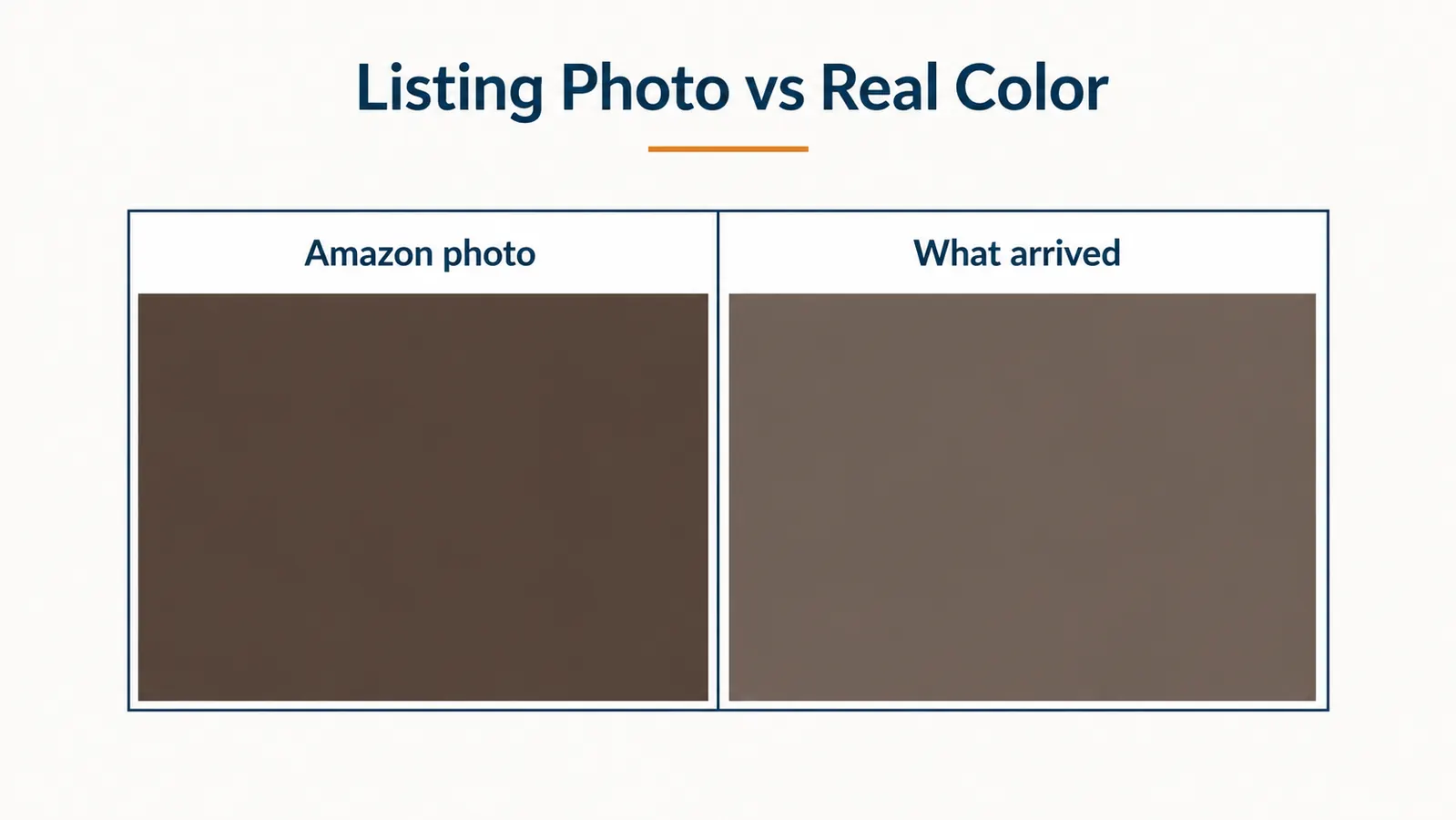
The first thing nobody talks about in those 77,000 reviews: the color you see in the listing photos is not the color that shows up at your door. I ordered the dark brown option. The listing photo shows a rich, almost espresso-toned surface with warm undertones. What arrived looked noticeably grayer and cooler under standard office fluorescent light. It is still a fine-looking pad. But if you are matching it to warm-toned wood furniture and expecting the listing photo to be your guide, you are going to be surprised.
This is not unique to Aothia. It is a known issue with faux-leather products on Amazon, where listing photos are shot under warm studio lighting that flatters the material. Aothia's listing photos are on the more optimistic end of that spectrum. The gray and black color options photograph much more accurately. If color match matters for your setup, go gray or black and skip the brown.
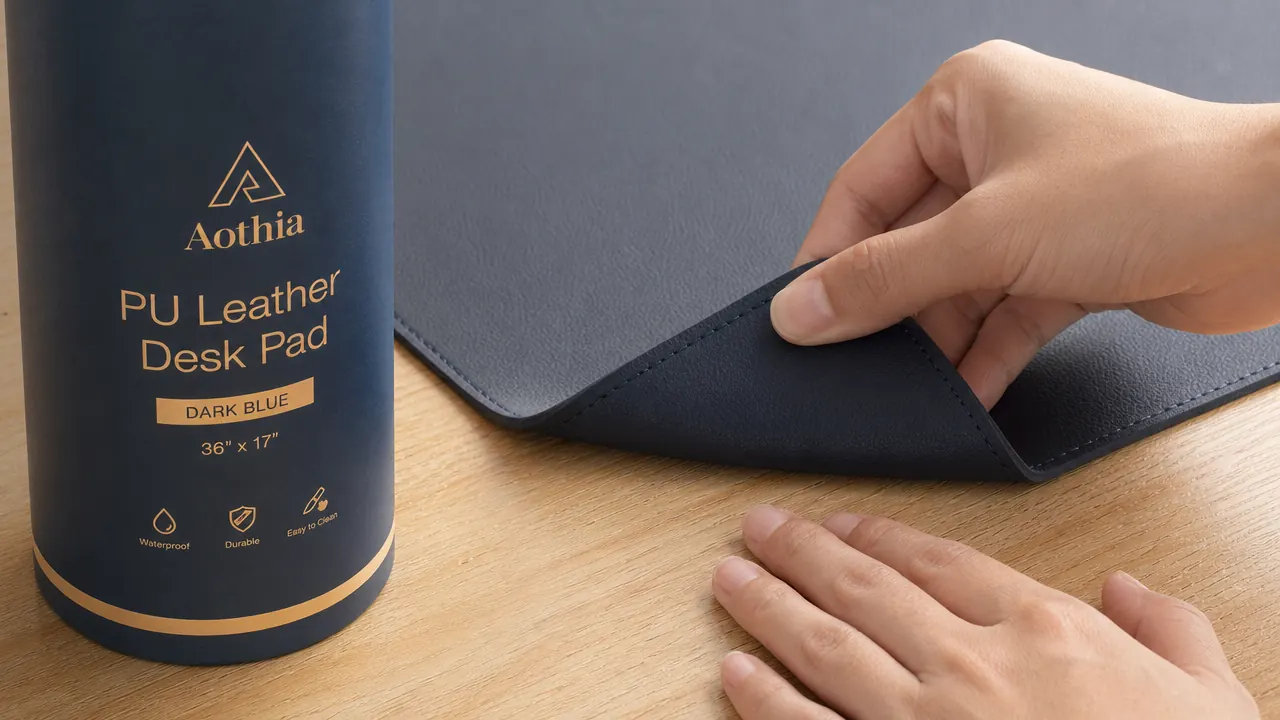
The Phrase 'PU Leather' Is Doing a Lot of Work
The listing calls it 'PU leather' and that term is accurate in a technical sense. PU stands for polyurethane. It is a synthetic coating bonded over a fabric or felt backing. There is no animal product involved. That is fine if you knew that already. But 'leather' in the name leads a meaningful chunk of buyers to expect something with the weight, texture, or aging character of real leather. They are going to be disappointed. The Aothia pad is a thin PU film over a foam-backed felt base. It feels smooth and looks clean, but pressing on it compresses immediately. There is no firmness feedback you would get from a real leather desk mat.
Again, not a flaw, just a mismatch between what the name implies and what the material actually is. At fourteen dollars the tradeoff is obvious. But if you are comparing it mentally to a full-grain leather blotter you touched at a colleague's office, the Aothia will feel like a different product category entirely. It is closer to a quality mouse pad than a leather writing surface.
At fourteen dollars the tradeoff is obvious. But 'PU leather' and 'leather' are not the same thing, and the listing leans on that ambiguity harder than it needs to.
The Non-Slip Base: Honest About Where It Works and Where It Fails
The non-slip backing on the Aothia is a fine-grain felt-like material. On wood desks, particleboard laminate, and most powder-coated or painted MDF surfaces it grips well. I pushed it repeatedly during regular use on a wood-veneer desk and it held position without complaint. The grip is not extraordinary but it is consistently adequate for the use case.
On a glass desk it fails completely. The felt base has no meaningful friction against glass. Within a few minutes of use the pad drifts, and if your mouse is active on the right side the whole mat slowly migrates toward the left edge of the desk. I tested this on a tempered glass desktop in my secondary workspace. The pad was useless there without tape or a secondary grip solution. If your desk is glass-topped, order something with a rubberized or silicone base instead. The Aothia is simply not made for it.
Highly polished synthetic desktops, like the high-gloss white surfaces you see on some IKEA ALEX setups, are a borderline case. I got moderate grip on one and almost none on another of the same model. The surface finish variation in those desk materials affects the outcome.
The Edge Stitching: Inconsistent Across Units
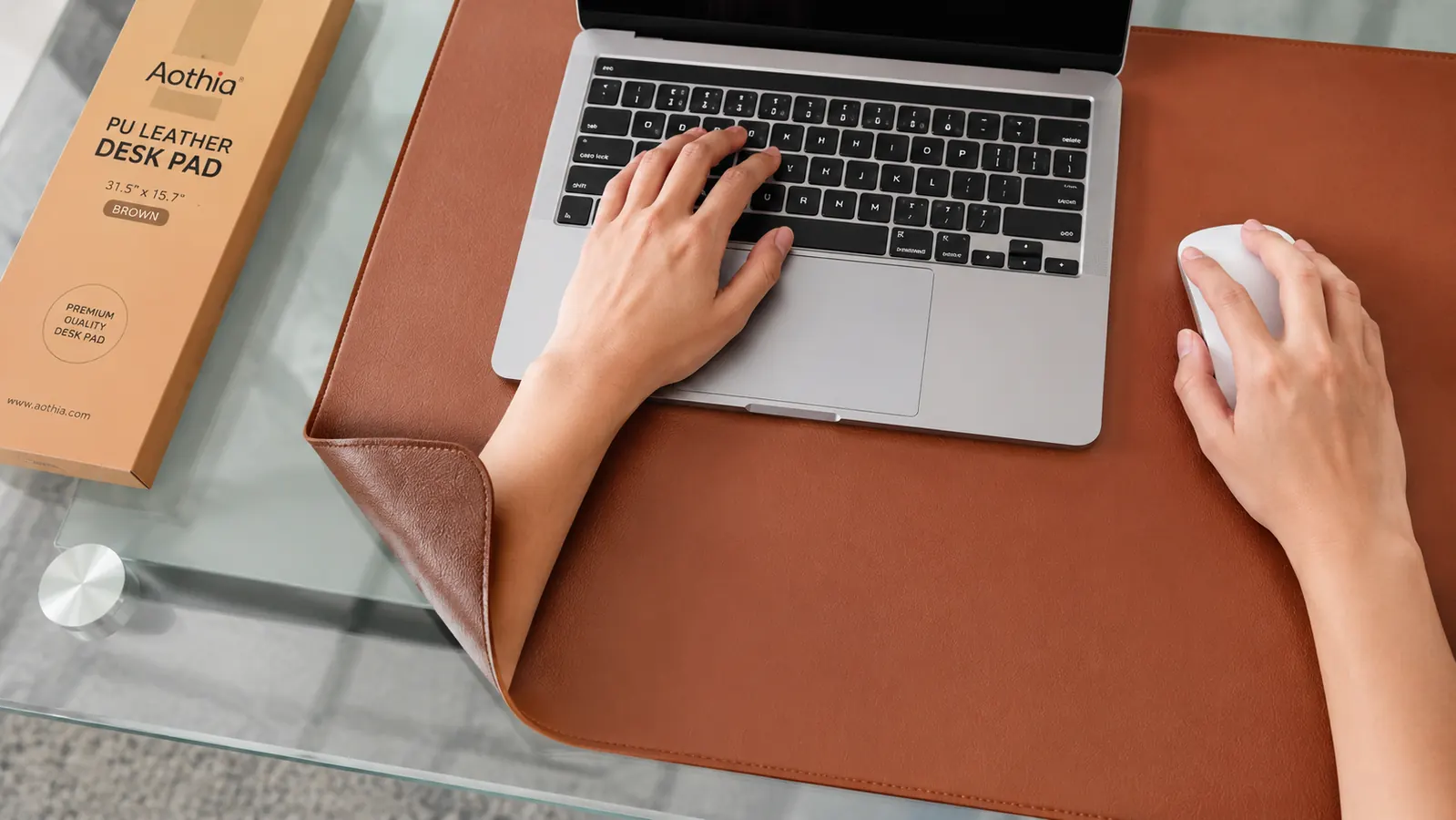
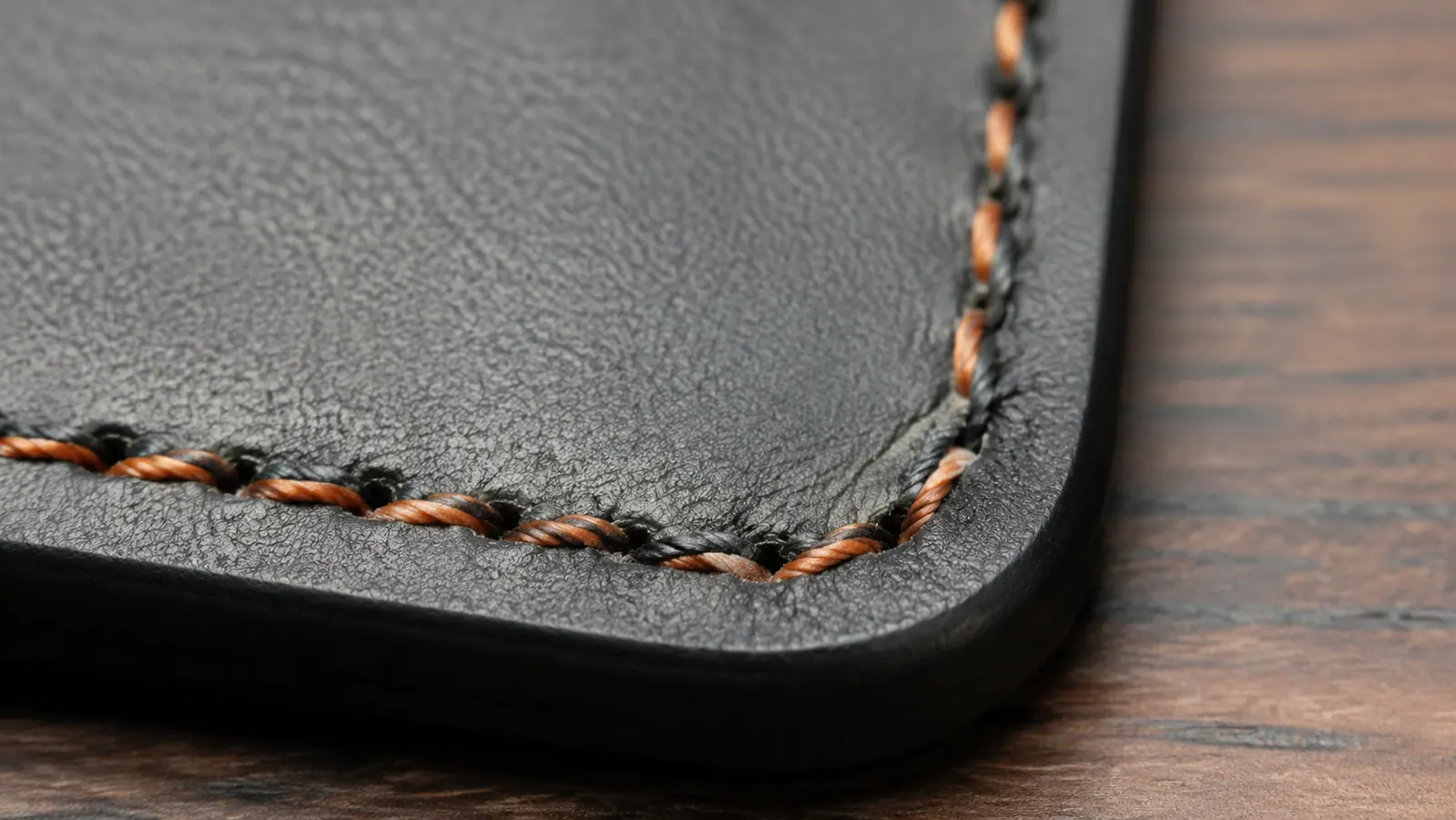
The stitching on the Aothia is one of its selling points, and in the photos it looks crisp and intentional. Two-tone contrast thread running along the border, tight and even. In practice I found real variation across the three units I received. One had clean, consistent stitching with no loose threads or uneven spacing. One had two corners where the spacing was noticeably wider, and a short section on one edge where the thread sat slightly raised instead of flush. The third was somewhere in between. None were defective enough to return, but they were clearly not coming off the same quality control tier.
This matches the pattern I see in the 1-star and 2-star reviews when I read them systematically. The complaints are almost never about the pad concept or the core material. They are about stitching that unraveled within weeks or corners that started lifting. Those reviews exist, they are in the minority, and they suggest the quality floor on a small percentage of units is lower than the average implies. At this price point this is forgivable. At a higher price it would not be.
What I Liked
- Grips well on wood, laminate, and most painted MDF surfaces
- Cleans up easily with a damp cloth, including coffee and ink
- Available in multiple sizes including an extended mat that covers most of a standard desk
- At this price point the material quality is genuinely above average for the category
- Looks clean and professional on camera for video calls
Where It Falls Short
- Does not grip glass or high-polish desk surfaces at all
- Color accuracy in listing photos is optimistic, especially for the brown option
- Edge stitching quality varies unit to unit, with some units noticeably less precise
- PU film is not real leather and compresses under pressure without any firmness feedback
- Arrives with a faint chemical smell that takes a few days to dissipate in a closed room
The Smell Nobody Mentions in Reviews
I want to flag this because it surprised me the first time and I never saw it mentioned in any of the reviews I read beforehand. The Aothia desk pad arrives with a faint but noticeable chemical smell. It is not overpowering. It is the kind of thing you notice when you first pull it out of the packaging and for the first day or two afterward, especially if your office is a small enclosed room. It aired out completely within three days with a window cracked. I never found it offensive, but I have seen buyers in Amazon questions mention sensitivity to off-gassing from new products. If you are in that category, let it air out in a ventilated space before putting it on your desk.
Size Options: The Listing Copy Is Confusing
Aothia sells this pad in several sizes, and the Amazon listing handles the size variants in a way that confuses a lot of buyers. The size that appears most prominently in searches and reviews is the standard single-monitor width, roughly 24 by 14 inches. There is also a larger extended version that runs nearly the full width of a desk. The problem is that the reviews are shared across sizes, so a review from someone using the small pad tells you nothing about whether the large one holds up the same way. When I bought the extended size I got slightly different edge stitching and a thinner feel in the PU layer. They may be sourced differently. Buy the size you need, but know that the review pool does not separate them cleanly.
Who This Is For
Remote workers and home office builders who have a wood or laminate desk, want a clean unified surface for keyboard and mouse, and are not looking to spend real money on a desk accessory. If you have spent any time with a bare desk surface and found yourself annoyed by the drag on mouse movement, the scratches accumulating on the wood, or the way your wrists feel after a long session, the Aothia solves all of that for less than fifteen dollars. It is also worth it if you are a freelancer or remote employee who sits in video calls and wants the desk behind the keyboard to look like a real workspace instead of a kitchen table.
Who Should Skip It
Anyone with a glass-topped desk should stop here and look elsewhere. The non-slip base will not hold on glass and you will spend more time resetting the pad than using it. Anyone expecting real leather texture, weight, or character should also pass. And if you are color-matching to warm wood furniture specifically and the brown option is what caught your eye, order with caution or go with gray instead. The Aothia is a strong product in its lane. Its lane is narrower than the listing implies.
For a deeper breakdown of how this pad holds up over extended daily use, including how the PU surface weathers with real wear patterns over time, see my long-term Aothia desk pad review. And if you are weighing whether the step up to a more expensive mat is worth it, the Aothia vs Nordik comparison covers that question directly.
Wood or laminate desk? This is the easiest fourteen dollars you will spend on your setup
The Aothia desk pad earns its rating for the right surface type. Check current availability and size options below.
Amazon Check Today's Price on Amazon →